Rama scaled one in 500 thousand

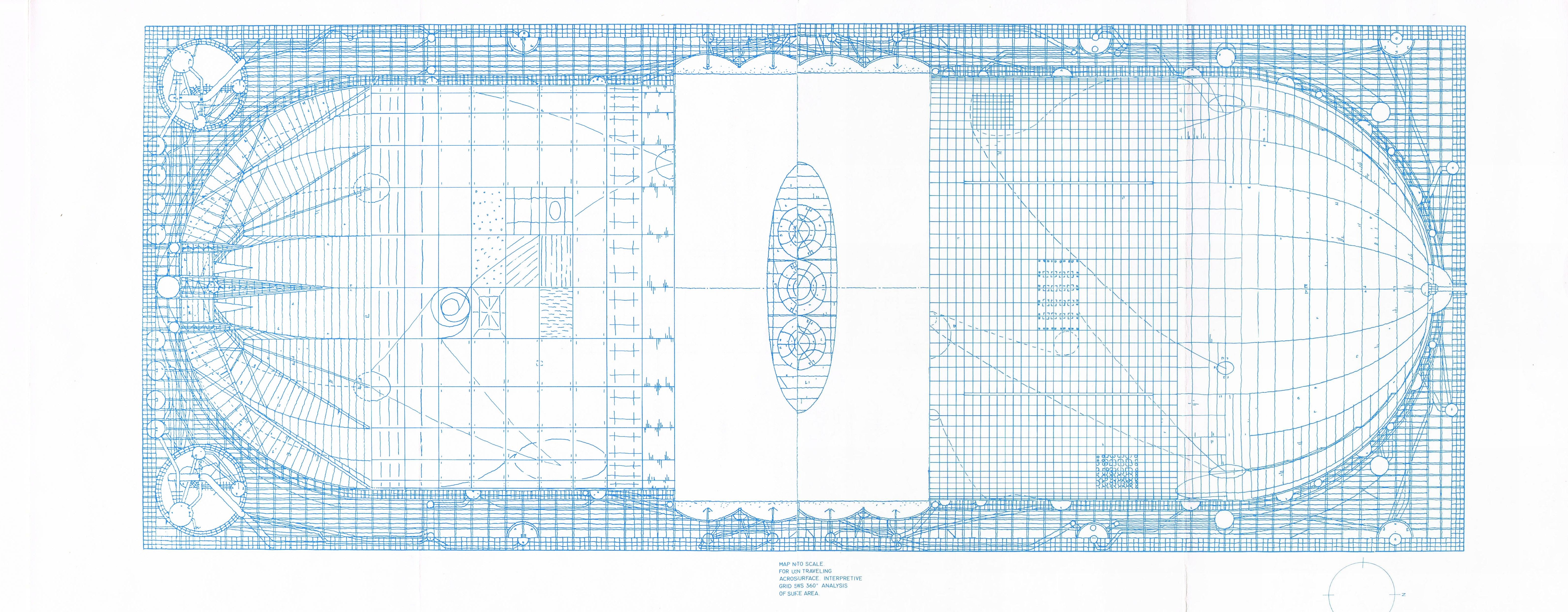
This is the model of the colossal centrifugal alien spaceship from the Arthur C. Clarke book Rendezvous with Rama, one of the most popular hard science fiction books. I made this based on what I read from the first book on the serie and this image, apparently from the cover art of a video game, but not from any information from its sequels. I've read only an Spanish copy, so some details may be wrong because of translation issues and adaptations.
Before printing anything, please, read this paragraph. I made this in various parts, depending on the scale, so they can be printed separately, and then glued. Cities must be printed separately and they will fit very loose, so they must be fixed with hot glue, or something alike. The scales available in this post are:
The file's names explained: name_1_x_10_y.stl is 1 : x * 10y. So _1_6_10_7 is 1:60000000 or one in 60 million.
I spend part of my time making these models, letting them available and free for everyone. If you want to support my work you can buy me a coffee in Ko-fi:

Si estás en Argentina podés invitarme a un cafecito:

Before printing anything, please, read this paragraph. I made this in various parts, depending on the scale, so they can be printed separately, and then glued. Cities must be printed separately and they will fit very loose, so they must be fixed with hot glue, or something alike. The scales available in this post are:
- One in 500 thousand. This is the smallest scale, about 10cm long. It can be made divided in north-center-south parts, or into longitudinal halves. The cities cannot be made in this scale.
- One in 200 thousand. a 25cm long model. It can be made divided in north-center-south parts, or into longitudinal halves. Cities are extremely small and I am not entirely sure they can be made even using resin (SLA) printers, I don't have one to test them.
- One in eighty thousand. It can be made divided in north-center-south parts, or into 12 smaller parts. This is a big model, it must be made in big printers (bigger than 25x25x20cm), or in several parts (showed in the image below). Cities may be printable even in FDM with a good configuration.
 |
| Order of parts |
The file's names explained: name_1_x_10_y.stl is 1 : x * 10y. So _1_6_10_7 is 1:60000000 or one in 60 million.
The accuracy of the model
The model was made taken these features as literal from the book:- The spaceship was a cylinder 50km long and 20km in diameter, although it can be expected aliens having different metrics, and these measures being actually rounded values instead of exact ones.
- Everything has a triple redundancy architecture, linearly or 120 degree distribution.
- The inner surface shape: concave in the north part (by its rotation), with three stairs; cylindrical plains divided by a sea: north hemisphere surface 8km from the rotational axis, and 50m above the sea level; and the south hemisphere 500m above the sea; the south pole has "horns", one bigger in the center
- There are 6 "towns" on the plains:
- London: closermost to a stair, a collection of tubes. It's located 15km East of Paris, which is equivalent to 120° counter clockwise.
- Paris: in the middle way from the stairs to the sea. It looks like an storage section with buildings.
- Rome. It's located 15km West to Paris, which is equivalent to 120° clockwise.
- Moscow
- Beijing
- Tokio
- A "city" in the middle of the sea, nicknamed "New York" after its shape. It's divided in three equally designed sections and it looks more alike a huge fabric than a city. It is located opposed to London (180°).
- London, Paris, Rome and Moscow belong to the northern hemisphere. However, in order to keep the symmetry, I placed Moscow on the south hemisphere.
- The towns were connected by "roads", but these roads are not explicit to be up or below the surrounding relief.
- There are 6 trenches 100m wide that run axially on both hemispheres. Those trenches resulted to be giant lanterns. I made them wider so they are more recognisable.
- The entrance is vaguely described, I played with its shape.
- Only New York, Paris and London are described in the first book, I made the rest as cartoonish mockups of the Earther counterparts.
- The cross-section features were taken from the videogame artwork; in the book the characters didn't dig below the habitable inner surface.
I spend part of my time making these models, letting them available and free for everyone. If you want to support my work you can buy me a coffee in Ko-fi:
Si estás en Argentina podés invitarme a un cafecito: